Industry Overview
Strategically located near Houston, Texas—the epicenter of the oil and gas sector—Epcon Industrial Systems operates a state-of-the-art, 250,000-square-foot, vertically integrated manufacturing facility. This prime location enables us to effectively support all facets of the industry, including upstream, midstream, and downstream operations.
Since our founding in 1977, Epcon has delivered over 4,300 industrial systems across various industries, with a significant focus on oil and gas applications. Our extensive experience and proximity to numerous oil and gas services have allowed us to collaborate with leading multinational corporations, providing advanced solutions for:
- Drilling and Pipeline Operations: Innovative technologies for efficient extraction and transportation.
- Petrochemical Refineries: Customized systems to enhance refining processes.
- LNG and Natural Gas Processing: Specialized equipment for liquefaction and gas treatment.
- Transportation and Compressor Stations: Robust solutions to ensure safe and efficient gas movement.
Patented and Proprietary Solutions
As an industry leader, Epcon offers patented and proprietary technologies tailored for Exploration & Production (E&P), midstream, and downstream oil and gas applications. Our solutions encompass:
- Curing and Coating of Drill and Line Pipe: Advanced systems to enhance durability and performance.
- Capturing Fugitive Emissions: Effective methods to manage volatile and corrosive vent streams.
Customized Air Pollution Control Systems
Our air pollution control systems are engineered to eliminate a wide range of toxic, VOC-laden process streams, including:
- Methane (CH₄): Mitigation of potent greenhouse gas emissions.
- Nitrogen Oxides (NOₓ): Reduction of pollutants contributing to smog and acid rain.
- Sulfur Oxides (SOₓ): Control of emissions leading to respiratory issues and environmental damage.
- Hydrogen Sulfide (H₂S): Safe handling of sour gas particulates to prevent corrosion and health hazards.
Our team of experienced engineers, designers, and fabricators collaborates closely with clients to develop robust, optimized system designs. We meticulously select appropriate materials of construction to meet and exceed the demanding requirements of energy service projects.
Related Case Studies
Explore our successful implementations in the oil and gas sector:
- Afterburner with Quench & Scrubber for Petrochemical Operations: An advanced air pollution control solution enhancing emission reduction.
- Dual RTO System Replaces Open Flare for Major Midstream Operation: A regenerative thermal oxidizer system improving operational efficiency and environmental compliance.
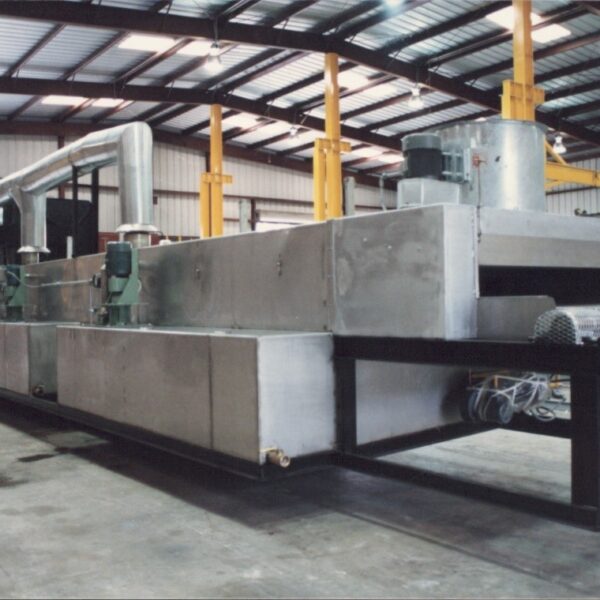
- Pipe Coating and Coupling Oven for OCTG Facility: Customized process heating equipment designed for optimal performance in oil country tubular goods applications.
- Direct Fired Thermal Oxidizer and Waste Heat Boiler for Petrochemical Manufacturer: An integrated system providing effective emission control and energy recovery.
At Epcon, we are committed to delivering innovative, efficient, and environmentally responsible solutions to meet the evolving needs of the oil and gas, petrochemical, and refinery industries.
Contact Us to learn how our custom-engineered systems can optimize your operations and ensure compliance with environmental regulations.
Related Case Studies
OUR PROCESS
OUR COMMITMENT
Customized Solutions
Turnkey Systems
Quality Manufacturing
Performance Guarantee
Explore Services
Dedicated Project Managers & Service Teams
- Process Evaluation & Technology Selection
- Environmental Consulting
- Engineering & Design Services
- Electrical Programming & Controls Systems
- Manufacturing & Testing
- Installation, Commissioning & Training
- Preventative Maintenance & Service
- Upgrades & Retrofits
- Spare Parts
- Rental Equipment
- Getaquote
- PRIVACY POLICY
- Air Pollution Control Questionnaire
- Industrial Oven Quote
- Industrial Finishing System Quote
- Specialty System Quote
- Events
- Epcon Industrial Systems Technical Glossary
- Epcon Industrial Systems – Customer FAQ
- Blog